


What Are Serviced Apartments — and Why Corporates Are Choosing Them
A serviced apartment is a fully equipped home let on hotel-like terms. For travel programmes managing assignments measured in weeks rather than nights, it is often the more sensible unit of accommodation — and the reasons are practical, not fashionable.
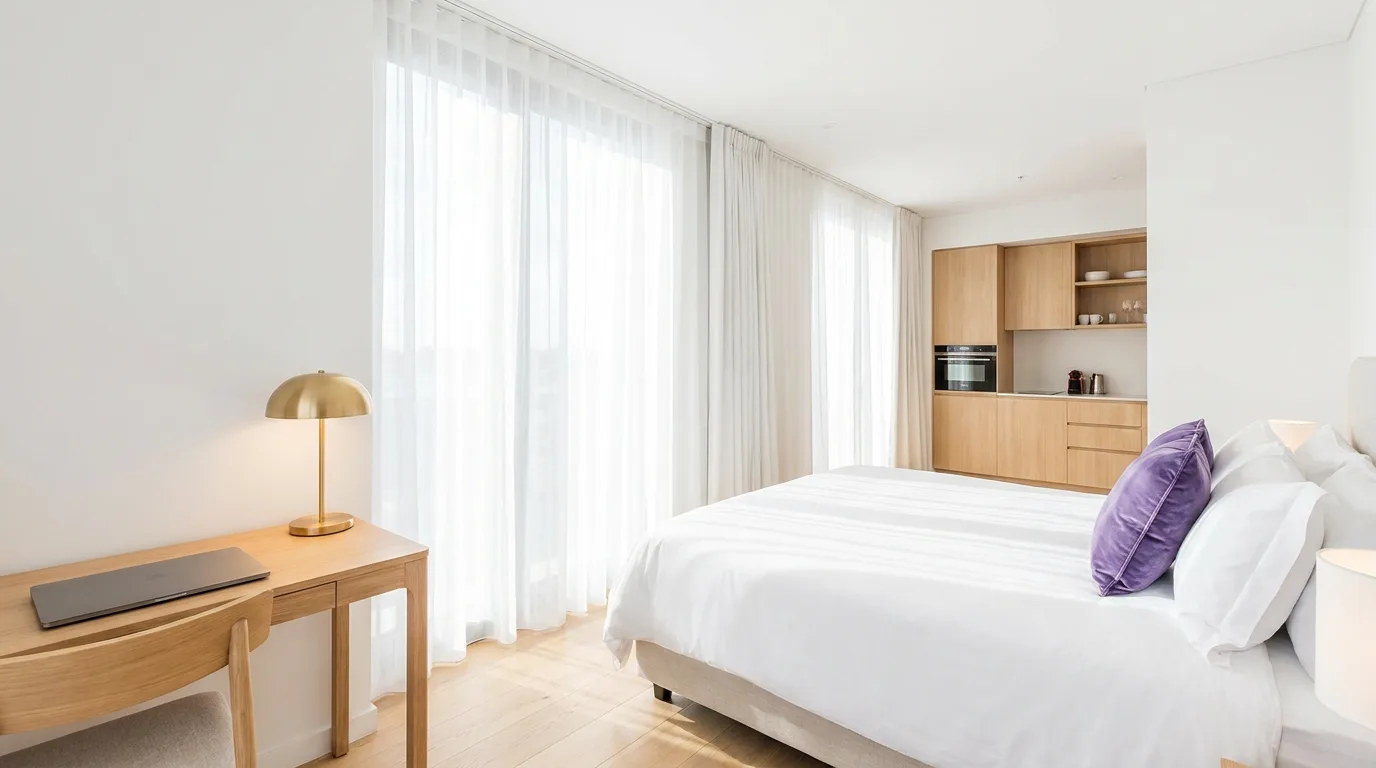
Ask a travel manager what changed in their accommodation mix over the last few years and the serviced apartment usually comes up. Not as a trend — as a line that quietly grew because the maths kept pointing at it. Here is what the format actually is, where it earns its place in a corporate programme, and where a hotel is still the better answer.
What a serviced apartment actually is
A serviced apartment is a self-contained home — bedroom, living area, an equipped kitchen, usually a washing machine — let on flexible terms with housekeeping, utilities, internet and building security folded into one rate. The distinction that matters is not luxury. It is structure: you are booking a home that is serviced, rather than a room that is staffed.
The formats vary more than the label suggests. Aparthotels sit inside a managed building with a reception desk and look much like a hotel from the lobby. Corporate housing tends to be a residential apartment in a residential block, taken for months at a time. Extended-stay brands sit between the two. All three trade as serviced apartments, and which one suits an assignment depends on how long it runs and how much front desk the traveller genuinely needs.
Why corporate travel teams are moving toward them
Three things drive it, and none of them is novelty.
The economics change past about a week
Hotel rates are quoted per night and priced for one or two people who eat out. An apartment is priced for a longer let and comes with a kitchen, so the daily rate is typically lower and the incidental spend — breakfasts, laundry, dinners on expenses — falls with it. The longer the stay, the wider the gap. For a short trip the difference is noise; for a twelve-week deployment it is a budget line.
One line item instead of several
Utilities, internet, housekeeping and often parking sit inside a single rate. That makes an assignment easier to budget before it starts and easier to reconcile after it ends. For a finance team, one predictable invoice covering a three-month posting is usually worth more than a marginally cheaper nightly rate that arrives as ninety separate charges across two quarters.
People do better in them
This is the least measurable reason and often the one that matters most. Somebody on a long project who can cook, do their own laundry, have a colleague round and keep something resembling a routine finishes the assignment in better shape than somebody living out of a suitcase in a room with a kettle. Attrition on long deployments carries a real cost, and accommodation is one of the few levers a travel programme can actually pull on it.
Where they fit — and where they do not
Serviced apartments are strongest for extended assignments, project deployments, relocations, and the settling-in period before an employee finds permanent housing. They also work well for small teams travelling together: a two- or three-bedroom unit frequently costs less than the equivalent hotel rooms and gives the group somewhere to work in the evening.
They are usually the wrong answer for a one- or two-night trip. Check-in can be less flexible, there is not always a twenty-four-hour desk, and the things that make an apartment good over six weeks — space, a kitchen, a residential location — buy you very little over two nights. A well-run programme uses both and decides per stay, not per policy.
What to check before you book one
- Location against the actual place of work, not the city centre. An apartment fifteen minutes from the office is worth more to the traveller than a fashionable postcode forty minutes away.
- What “serviced” includes. Housekeeping frequency, linen changes, whether utilities are capped, and what happens if something breaks at nine on a Sunday evening.
- Minimum stay, and the notice to extend or leave early. Assignments move. The contract should be able to move with them.
- Who is accountable. A directly contracted operator with a named contact is a different proposition from a listing on a consumer booking site.
- How it invoices. If the programme runs on cost-centre allocation or centralised billing, confirm that before the booking rather than after the first invoice.
The short version
For anything longer than about a week, a serviced apartment is usually cheaper to run, easier to account for, and better for the person staying in it. For anything shorter, a hotel generally still wins. The useful discipline is to treat the two as different tools rather than as a house preference — and to have someone in the programme who can secure either, at a negotiated rate, in the city the work is actually in.
If you would like to see how that plays out across your own travel pattern, our serviced apartments desk will come back with costed options rather than a brochure.